
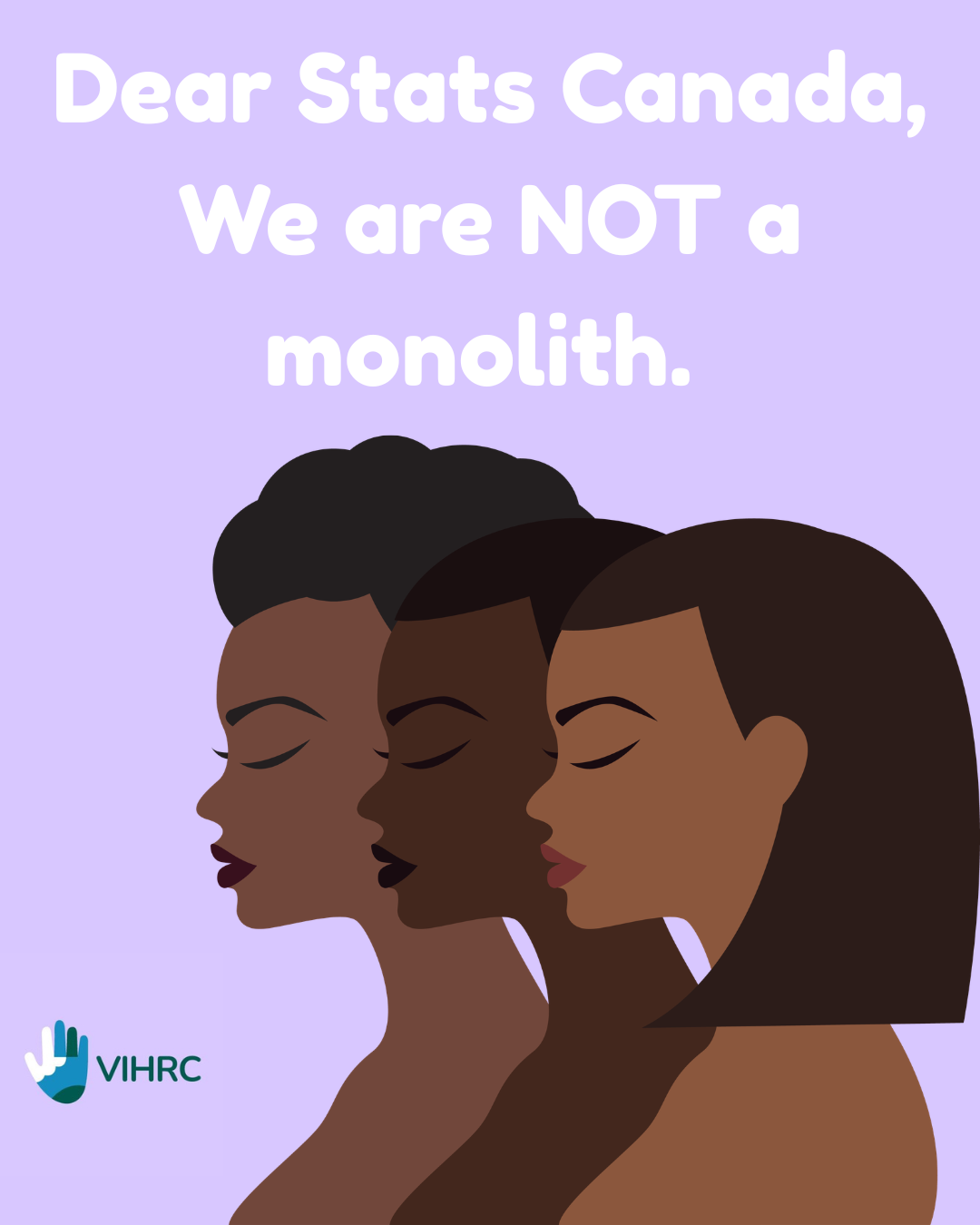
After years of advocacy during the UN Decade for People of African Descent, why are we still being erased by the same form that recognizes the diversity of other communities?
Black people living in Canada deserve to be counted — accurately and completely.
FOR IMMEDIATE RELEASE
Opinion: Census categorization flattens Black diversity — urgent call for nuanced racial data
Victoria, B.C. Canada. Wednesday, May 13, 2026: Yesterday, while completing my census and reaching the question, “Which population group or groups best describe this person?”, I was struck by a painful inconsistency: people can tick boxes for specific national identities like Japan or Korea, yet I — and millions of Black people living in Canada of African, South American and Caribbean descent — am confined to a single, homogenized “Black” checkbox that erases our diverse histories, cultures, and nations.
As a Black woman and community advocate, I am deeply concerned by how the national census continues to collapse thousands of distinct Black identities into a single, broad category. After years of community work, research, and advocacy to combat anti-Black racism, our lived realities remain invisible when the state treats “Black” as a monolith — while other racialized groups are offered granular options that reflect complex national, ethnic, and cultural differences.
The Black diaspora is not a single culture. It includes, among many others, people who identify as:
Nigerian, Ghanaian, Cameroonian, Togolese (West African identities)
Ethiopian, Eritrean, Somali (Horn of Africa identities)
Kenyan, Ugandan, Tanzanian (East African identities)
Congolese, Rwandan, Burundian (Central/East-Central African identities)
South African, Zimbabwean, Zambian, Mozambican (Southern African identities)
Haitian, Jamaican, Trinidadian and Tobagonian, Barbadian, Guyanese (Caribbean identities)
Afro-Latinx (e.g., Colombian, Brazilian, Dominican, Cuban) with distinct Iberian and Indigenous influences
Afro-European (Black British, Black French, Afro-German and other Black Europeans)
Black Indigenous and mixed-heritage communities whose histories predate colonially defined borders
Each of these communities carries its own languages, histories, migration stories, faith traditions, cultural practices, and socio-political contexts. Lumping us together erases differences in indicators that matter: educational attainment, immigration status, labour force participation, health disparities, rates of policing and incarceration, language access needs, and culturally specific supports. Aggregated data can hide who needs which services and where investments should be targeted.
Contrast this with how many census forms allow people of Asian descent to identify more specifically — for example, Chinese, Filipino, Indian, Vietnamese, Korean, etc. Those distinctions help governments and service providers tailor programs, fund language services, and track inequities specific to communities. Why are similar distinctions not routinely available for Black communities, when the same logic applies? The absence of granularity for Black populations is not neutral: it reproduces colonial-era simplifications and denies policymakers the information required to address targeted anti-Black discrimination.
In 2015 the United Nations proclaimed 2015–2024 the International Decade for People of African Descent, and many governments and civil society organizations used this period to spotlight systemic anti‑Black racism and to develop targeted policies and programs. With extensions and continued focus beyond that decade, there is renewed momentum to translate commitments into measurable changes. This makes it all the more urgent that census data capture the full diversity within Black communities so progress during and after the Decade can be properly measured, held to account, and built upon.
As someone filling in my census, I feel the tension between the importance of being counted and the frustration of being flattened into a category that fails to represent my lived complexity. When the state asks “Are you Black?” without asking “Which Black community do you belong to?” it signals a lack of commitment to understanding and remedying the specific harms experienced by different Black communities.
Our ask is simple and urgent:
Expand census categories and response options to capture the diverse national, ethnic, and cultural identities within Black populations.
Allow multiple, disaggregated identifiers (national origin, ethnicity, language, and Afro-descendant subcategories) so data can meaningfully inform policy and funding.
Consult with Black-led community organizations when designing the questions to ensure categories are respectful, relevant, and useful.
Commit to releasing disaggregated data publicly so researchers, advocates, funders, and communities can track outcomes and hold institutions accountable.
Until the census recognizes our diversity, decisions about resources, services, and policy will continue to be made with incomplete — and therefore unjust — information. I filled in my census yesterday because counting matters; now we call on government to count us accurately.
Contact:
Dominique Jacobs
Executive Director, Vancouver Island Human Rights Coalition
contactvihrc@gmail.com